
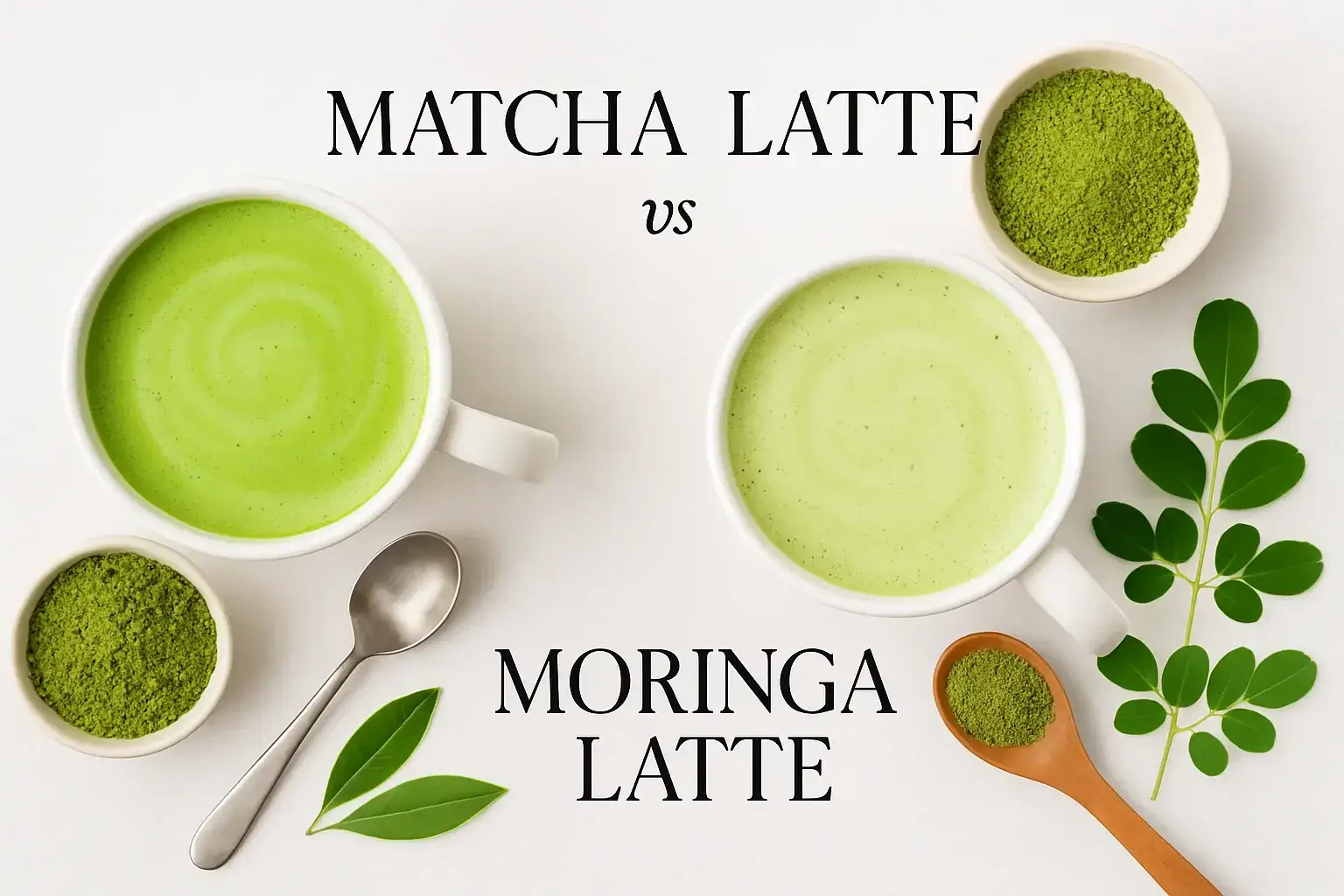
Key Takeaways: Matcha stimulates concentration, while moringa nourishes the body. This distinction helps you choose between a mental energy boost or a relaxing vitamin intake. Notably, only moringa contains all nine essential amino acids.
Are you looking for the ideal coffee alternative but still hesitating about which green powder to adopt for your health ritual? This guide explores the key differences in matcha moringa latte by analyzing their unique flavor profiles and real impacts on your energy levels. Get ready to identify the nutritional ally that matches exactly your metabolism and taste preferences.
Sommaire
Matcha vs Moringa: The Clash of Green Powders
Origins and popularity: two stories, one color
Matcha isn’t just a simple infusion—it’s a Japanese green tea powder obtained by grinding whole leaves. This method concentrates caffeine and L-theanine, which explains its ancestral use by monks to maintain unwavering concentration.
On the other side, moringa comes from India, extracted from what’s nicknamed “the miracle tree.” Its popularity is currently exploding as a superfood thanks to its exceptional nutritional density, offering raw vitality without the nervous excitement typical of tea or coffee.
Taste: a matter of palate
Matcha unfolds a complex flavor, dominated by vegetal notes and rich in umami. Beware the quality trap: a ceremonial grade offers exquisite smoothness, while low-grade culinary powder will assault you with dry bitterness.
Moringa surprises with a more earthy, herbaceous profile, sometimes reminiscent of radish or spinach with a peppery note. It’s a raw flavor that definitely benefits from being softened in a latte.
Caffeine and Nutrients: The Technical Duel
But beyond taste, these two beverages truly distinguish themselves on the functional level. One wakes you up, the other nourishes you.
The energy kick: with or without caffeine?
Matcha contains caffeine, but L-theanine tempers its immediate release. This duo ensures stable energy and increased concentration, without coffee’s jitters. It’s the productivity asset par excellence.
Conversely, moringa is naturally caffeine-free. It’s therefore the perfect alternative for a comforting latte at any time, even late in the evening. You risk no sleep disruption.
Compared nutritional profile
Moringa is a true raw nutritional powerhouse. It contains all 9 essential amino acids, as well as vitamins B6 and C. With its iron and magnesium, it actively supports your daily vitality. Few plants rival this density.
Matcha isn’t far behind with its chlorophyll and powerful antioxidants (EGCG). Its real strong point lies in its proven ability to boost metabolism daily. It’s massive cellular support.
How to Choose and Prepare Your Latte
So, practically speaking, how do you go from powder to cup? And above all, which one is right for you?
Preparation: a similar ritual
Whether you opt for matcha or moringa, the technique remains identical: dissolve the green powder in a little hot water.
Add your milk, dairy or plant-based, then sweeten with honey or maple syrup as desired. The trick lies in vigorous whisking to eliminate lumps and obtain a velvety texture.
Matcha or moringa: the verdict
| Criteria | Matcha Latte | Moringa Latte |
|---|---|---|
| Energy | Stimulating (caffeine) | Nutritive (caffeine-free) |
| Main taste | Umami, vegetal | Earthy, herbaceous |
| Ideal for… | Morning, concentration | All day, nutrition |
Matcha latte is the choice if you’re seeking an immediate boost and unique aromatic complexity. It’s the cerebral fuel par excellence for those demanding heightened alertness without black coffee’s agitation.
Conversely, moringa latte targets those who prioritize a nutrient-rich, completely caffeine-free beverage. It’s the perfect alternative to fuel up on vitamins at any hour without risking insomnia.
In short, matcha and moringa aren’t rivals but complementary. The former offers ideal energy and concentration, while the latter guarantees exceptional nutritional intake without caffeine. According to your needs of the moment, alternate these two green powders to maximize your well-being.
FAQ
Matcha or Moringa: which to choose based on your needs?
The choice between these two superfoods depends essentially on what you’re looking for. If you need an energy boost and increased concentration for work, matcha latte is ideal thanks to its caffeine and L-theanine content. It’s brain fuel par excellence.
On the other hand, if your priority is complete nutritional intake without nervous stimulation, moringa is the best option. Nicknamed “the miracle tree,” it’s perfect for addressing iron or vitamin deficiencies and supporting your overall vitality without preventing sleep.
What are the compared benefits of matcha and moringa?
Matcha shines through its exceptional concentration of antioxidants, notably catechins (EGCG), which help fight oxidative stress and stimulate metabolism. It also offers unique “calm alertness,” avoiding the heart palpitations often associated with coffee.
Moringa, meanwhile, is a true nutritional powerhouse. It contains all 9 essential amino acids (a complete protein rare in plants), as well as impressive amounts of vitamins A, C, E, calcium, and potassium. It’s a powerful ally for immunity and muscle recovery.
What’s the ideal time to enjoy a matcha latte?
Due to its caffeine content, matcha is preferably consumed in the morning or early afternoon. It advantageously replaces coffee for an effective wake-up or serves as a natural stimulant after lunch to avoid the afternoon slump.
It’s generally advisable to avoid matcha after 4 or 5 PM if you’re sensitive to stimulants, to avoid disrupting your sleep cycle.
When should you consume moringa to benefit from its virtues?
One of moringa’s great advantages is that it’s naturally caffeine-free. You can therefore drink a moringa latte at any time of day, including in the evening as a comforting beverage before sleep.
It’s an excellent alternative for those who want a hot, nutritious wellness ritual at the end of the day, without risking insomnia.
Can you mix matcha and moringa in the same drink?
Absolutely! Mixing both powders allows you to create a “half-caf latte” that combines the best of both worlds. You thus benefit from matcha’s gentle energy and moringa’s complete nutritional profile.
To do this, use half a dose of each powder. Moringa’s earthy taste pairs quite well with matcha’s vegetal and umami notes, especially when softened with milk and a little honey or maple syrup.
How to prepare and drink these powders for optimal taste?
Matcha needs to be whisked (ideally with a bamboo whisk or electric frother) in a little hot water to create a frothy, smooth emulsion, before adding milk. This reveals its umami notes and reduces bitterness.
Moringa, having a more herbaceous and peppery taste (sometimes spicy), benefits from being well mixed with a fat like milk (dairy or plant-based) and a sweetener. Don’t hesitate to use a shaker or blender to properly dissolve the powder and avoid lumps.
![African Superfoods - Top 4 and Benefits [2025]](https://distributionarmel.com/wp-content/uploads/2025/11/Super-aliments-africains-1024x683.webp)